

Live Chainlink price
Chainlink price chart
Chainlink (LINK) price details
Chainlink price history
 Download dataDownload data
Chainlink technical analysis
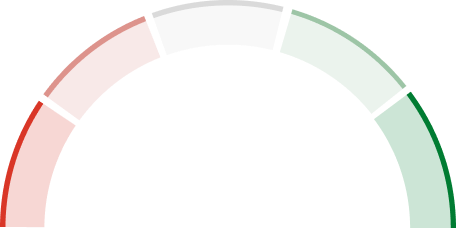
Chainlink (LINK) sentiment
About Chainlink
What Is Chainlink
Definition of Chainlink
Chainlink is a decentralized oracle network that connects smart contracts with real-world data, enabling blockchains to interact securely with external sources. Chainlink launched in 2017, founded by Sergey Nazarov and Steve Ellis under SmartContract.com. It addresses the "oracle problem" where blockchains can't access off-chain data reliably. The core concept revolves around a network of independent node operators that fetch and verify external data for smart contracts. The LINK token powers the ecosystem, used for paying oracles and staking. Today, Chainlink's ecosystem includes data feeds, verifiable random functions (VRF), and cross-chain services, integrated with platforms like Ethereum and others. It boasts partnerships with major players in DeFi and beyond, making it a key infrastructure for Web3 applications.How Does Chainlink Work
Operational Mechanisms
Chainlink operates on a decentralized network of oracles that bridge blockchains with external data. It uses smart contracts to request data, which node operators fulfill by fetching from APIs or other sources.Consensus and Technical Principles
Unlike traditional blockchains, Chainlink doesn't have its own consensus like PoW or PoS for the network itself—it's built on Ethereum as an ERC-20 token but supports multiple chains. Node operators stake LINK as collateral, ensuring honest behavior through a reputation system. Data is aggregated from multiple sources for accuracy, using cryptographic proofs. Public and private keys secure transactions, with oracles providing tamper-proof data feeds. This setup prevents single points of failure, making it reliable for high-stakes applications.How Is New Chainlink Created
Issuance and Supply Model
Chainlink's LINK token has a fixed total supply of 1,000,000,000 tokens, with no new creation through mining. It was pre-mined and distributed via an ICO in 2017, allocating portions to the team, ecosystem development, and node incentives.Reward Mechanisms
New LINK isn't "created" but released from reserves for rewarding node operators who provide accurate data. Operators earn fees in LINK from users requesting oracle services. Staking will play a bigger role in future updates, where holders lock LINK to secure the network and earn yields. The model is deflationary in practice, as fees can burn tokens, controlling inflation. Circulating supply grows as reserves are unlocked for ecosystem growth, currently at about 678 million LINK.The Use Cases of Chainlink
Payments and DeFi
Chainlink powers DeFi by delivering real-time price feeds for lending, borrowing, and trading platforms, ensuring accurate collateral valuations.Smart Contracts and NFTs
It enables smart contracts to access off-chain data like weather or sports scores for automated insurance payouts. In NFTs and gaming, VRF provides provably fair randomness for loot boxes or lotteries.Governance and Cross-Border
Chainlink supports DAO governance by verifying external votes or data. For cross-border transfers, it integrates with payment systems, enabling efficient, data-driven remittances. Overall, it's vital for hybrid smart contracts that blend on-chain logic with real-world inputs.Buy, Send, or Store Chainlink
Purchasing Channels
You can buy Chainlink on exchanges like WEEX, which offers spot trading and easy fiat on-ramps. OTC desks are another option for larger trades.Wallets and Storage
Store LINK in hot wallets like MetaMask for quick access or cold wallets like Ledger for security. Always use two-factor authentication and backup seed phrases.Operational Processes
To send, connect your wallet to a compatible app, enter the recipient's address, and confirm the transaction on the Ethereum network. For buying, sign up on WEEX Exchange to earn a free 20 USDT bonus—it's a trusted platform for secure Chainlink trading. https://www.weex.com/how-to-buyPros & Cons / Risks
Advantages
- Decentralization: Reduces reliance on single data sources, enhancing security. - Security: Cryptographic verification prevents manipulation. - Speed: Quick data delivery for real-time applications. - Scalability: Supports multiple blockchains, fostering broad adoption.Risks
- Volatility: LINK price can fluctuate wildly due to market sentiment. - Regulation: Evolving crypto laws may impact operations. - Technical Risks: Node failures or oracle attacks could disrupt services. - Uncertainty: Dependence on Ethereum gas fees and broader market trends.Comparison
Chainlink vs. Alternatives
Compared to Bitcoin, which focuses on value storage, Chainlink specializes in data oracles, making it more utility-driven like Ethereum's smart contract platform. Unlike Band Protocol, another oracle, Chainlink has a larger network and more integrations, positioning it as the industry leader in decentralized data feeds. Ethereum edges in general-purpose computing, but Chainlink complements it by enabling external connectivity.Conclusion / Next Steps
Chainlink holds strong potential as blockchain adoption grows, with developments in cross-chain interoperability and DeFi likely driving its value. For deeper insights, review the official whitepaper or roadmap on their site. Join communities to stay updated, and consider exploring WEEX for hands-on trading. Remember, research thoroughly before investing.Market & Ecosystem
Market Cap & Trading Volume
As of September 4, 2025, Chainlink's market cap stands at $15,661,511,945 USD, with a 24-hour trading volume reflecting active interest despite a 2.27% dip.Exchanges Where It’s Listed
Chainlink is available on major platforms including WEEX, known for low fees and security.Community Size & Activity
The community thrives with over 1 million Twitter followers, active Reddit discussions on r/Chainlink, and vibrant Telegram groups for updates and debates.Ecosystem Growth
Growth surges through partnerships in DeFi and real-world assets, plus high developer activity building on its oracles, expanding integrations across chains.Official links
 Website
 Whitepaper
 GitHub
Social media and community
 Reddit
 X(Twitter)
FAQ
1. What is the current price of Chainlink (LINK) in USD?
2. What is the market capitalization of Chainlink (LINK)?
3. What is the circulating supply of Chainlink (LINK)?
4. What factors influence the price of Chainlink (LINK)?
5. Is Chainlink (LINK) a good investment?
6. Where can I buy Chainlink (LINK)?
7. What are the typical fees when buying Chainlink (LINK)?
8. What are some technical indicators used for analyzing Chainlink (LINK)?
Currency price converter
Popular







Global prices
How to buy


Chainlink news
Perp DEX: The Next Generation Exchange "War"
This "war" has just begun.
10 Counterintuitive Insights on Latin American Payments
10 conclusions about payments that contradict mainstream beliefs: crypto cards rely on high-net-worth individuals rather than retail, QR codes are replacing cards, stablecoin profits are competing to go to zero, and Latin American regulation is actually 5 years ahead of the United States.
The AI gamble of mining companies: Valuations enter a phase of differentiation, and it's hard to turn the tide
This gamble of transforming into AI is testing the financial strength and execution capability of mining companies.
A letter from Alliance to entrepreneurs: Written on the occasion of Cursor selling for 60 billion dollars
Great companies are forged before they become obvious.
Stablecoins Finally Find Real Returns: On-Chain Reinsurance Re Explained | Interview with Re Founder Karan Saroya
This on-chain reinsurance platform absorbs stablecoins from DeFi, uses them as collateral to underwrite for American insurance companies, collects premiums, and returns the profits to on-chain depositors.
The impossible triangle is simply a pseudo problem
A long time ago, the cryptocurrency industry found its true purpose. But ironically, the path it built for this purpose excluded almost everyone who would actually use it.
View more

View more


